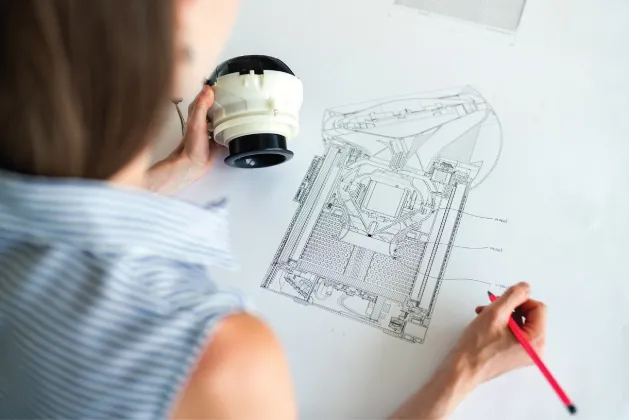
What Are a Design Engineer's Job Responsibilities?

A design engineer's primary responsibility is to create and develop designs for products or systems based on client specifications, company needs, and regulatory standards. This role involves using software tools, such as CAD (Computer-Aided Design), to model, test, and refine concepts.

Design Engineer Key Tasks:

  • Creating detailed design plans and prototypes using CAD software
  • Collaborating with cross-functional teams, including product managers and engineers
  • Conducting tests to ensure design functionality and performance
  • Modifying and improving existing designs to enhance product efficiency
  • Analysing the feasibility and safety of designs
  • Documenting designs, processes, and testing results efficiently
  • Managing design projects from concept to implementation
  • Adhering to industry standards, regulations, and safety requirements
What Are a Design Engineer's Job Responsibilities?
What are the essential skills for a Design Engineer?

To succeed as a design engineer, a strong technical background, creativity, and problem-solving abilities are essential. A degree in mechanical engineering, product design, or a related field is typically required, and many employers look for candidates with a solid understanding of engineering principles. Familiarity with design software, analytical skills, and attention to detail are key to bringing innovative solutions to life. Additionally, working well within a team and communicating ideas effectively is crucial.

Qualifications and Certifications:

  • A degree in mechanical engineering, product design, industrial design, or a related field (BEng, MEng, or equivalent)
  • Relevant certifications or further qualifications in design engineering (e.g., CAD certifications or project management courses) may be beneficial.

Key Skills for Design Engineers:

  • Proficiency in CAD software (e.g., AutoCAD, SolidWorks, CATIA)
  • Strong analytical and problem-solving skills
  • Creativity and the ability to think outside the box to develop innovative solutions
  • Excellent attention to detail and precision when designing products
  • Good understanding of engineering principles and materials used in design
  • Communication skills for collaborating with team members, clients, and stakeholders
  • Time management and organisational skills to manage multiple projects and meet deadlines

These skills and qualifications will help you thrive in the design engineering role and contribute to the successful development of products and systems.

What are the essential skills for a Design Engineer?
Design Engineer Typical Work Environment

Design engineers typically work in office settings, engineering design firms, or within the R&D (Research and Development) departments of larger manufacturing companies. They may work closely with other engineers, product managers, and manufacturing teams to ensure their designs meet the company's needs and specifications. Depending on the industry, work can sometimes require visits to manufacturing sites for product testing or prototypes.

Design Engineer Typical Work Environment
Design Engineer Career Progression

Design engineers have many opportunities to progress in their careers. With experience, you can move into more senior design roles or management positions or specialise in particular areas, such as product development or project management. There is also the potential to transition into roles like design manager, product manager, or technical consultant.

Design Engineer Career Progression
Design Engineer Job Vacancies in Essex and Suffolk
We regularly recruit for design engineer roles across Essex and Suffolk. Whether you're an experienced professional or a graduate looking to start your career in engineering, we have a range of exciting roles available.
Temporary Customer Service Administrator

Fast-paced temporary customer service/admin role near Chelmsford. Ideal for a confident, organised and tech-savvy candidate who enjoys busy environments.

£12.71 p/h
Chelmsford, Essex
Office & Administration
On-site
Job ref: 96442_1781442005 View
Temporary Scissor Lift Operator

Do you have a scissor lift license? Are you local to Saxmundham? Are you immediately available?

£14.00 - £15.00 p/h
Saxmundham, Suffolk
Manufacturing
On-site
Job ref: 96435_1781431210 View
Temporary Fork Lift Driver

Immediate start available with a starting pay rate of £13.50ph. Benefits after probation include 25 days holiday plus bank holidays, income protection, and enhanced overtime rates.

£13.00 - £14.00 p/h
Woodbridge, Suffolk
Manufacturing
On-site
Job ref: 130071_1781431211 View
Permanent Stores Operative

Prime Appointments are currently recruiting for a Stores Operative to join a well-established and growing manufacturing company based in Saxmundham.

£30,000 p/a
Saxmundham, Suffolk
Manufacturing
On-site
Job ref: 13748_1781431211 View
Temporary Machine Operator

Are you looking for a new role? Are you familiar with production machinery? Are you local to Saxmundham, Suffolk?

£13.00 - £13.50 p/h
Saxmundham, Suffolk
Manufacturing
On-site
Job ref: 96221_1781431210 View
Temporary Forklift Driver

Do you have an in-date counterbalance license? Are you qualified to drive C1 vehicles? If so, we have a role in Leiston, Suffolk.

£14.50 p/h
Leiston, Suffolk
Warehouse
On-site
Job ref: 96409_1781431210 View
Permanent Welder

Are you looking for welding work? Do you live local to Ipswich, Suffolk? If so, please apply for the following role!

£16.00 - £17.00 p/h
Ipswich, Suffolk
Manufacturing
On-site
Job ref: 94185_1781431210 View
Temporary Production Operative

Are you looking for immediate work? Production Operatives Needed. Weekly Pay and Overtime available. Woodbridge, Suffolk!

£12.74 p/h
Woodbridge, Suffolk
early and late shifts
Food & Beverage
On-site
Job ref: 95567_1781431210 View
FAQs About Design Engineer Jobs
What qualifications and experience do I need to apply for design engineer roles?

Most employers require a degree in mechanical engineering, product design, industrial design, or a related field to apply for design engineer roles. Familiarity with CAD software (e.g., AutoCAD, SolidWorks, CATIA) is often essential. While some positions may be open to entry-level engineers with relevant qualifications, prior experience in engineering design or internships can be beneficial.

What design software skills are most commonly required for design engineer positions?

Design engineers commonly use CAD (Computer-Aided Design) software, such as AutoCAD, SolidWorks, CATIA, or PTC Creo. Knowledge of other software tools like MATLAB for simulations, 3D modelling software, and design analysis tools may also be required depending on the specific role and industry.

What industries typically hire design engineers in Essex and Suffolk?

Design engineers are hired in various industries, including manufacturing, automotive, aerospace, electronics, and consumer goods. In Essex and Suffolk, you’ll likely find opportunities in manufacturing, automotive design, and tech industries, as both counties have a strong industrial and engineering presence.

How can I advance my career as a design engineer in this region?

To advance your career as a design engineer, gaining experience through increasingly complex projects and taking on leadership responsibilities is essential. Pursuing professional development through certifications, project management courses, or advanced qualifications like an MSc can also help. Senior positions such as Design Manager or Technical Director may be reached through a combination of experience, skill-building, and networking.

What salary range can I expect for a design engineer role in Essex and Suffolk?

The salary range for design engineers in Essex and Suffolk typically starts at around £30,000 per year for entry-level positions and can rise to £45,000–£50,000 for mid-level roles. Senior or more specialised roles can command salaries of £50,000 and above, depending on experience, skills, and industry.

Are there opportunities for professional development or further certifications within design engineering?

Yes, there are several opportunities for professional development in design engineering. Engineers can pursue certifications in project management (e.g., PRINCE2, PMP), advanced CAD courses, or specialised software training. Joining professional organisations, such as the Institution of Mechanical Engineers (IMechE) or Institution of Engineering Designers (IED), can provide access to resources, networking, and further career development opportunities.

Design Engineer recruitment
Search for a Design Engineer Role Today!