What a Former SAS Soldier Taught Us About Job Rejection
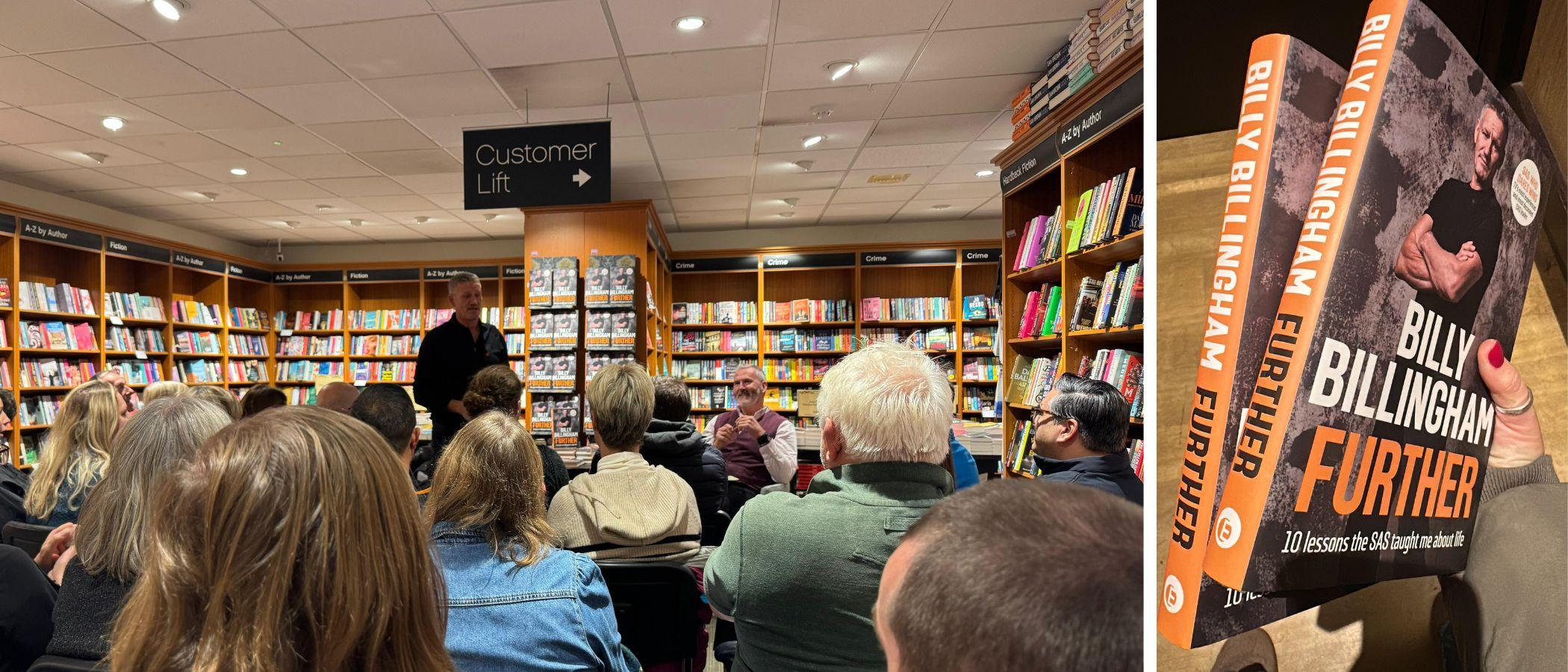
Recently, our Recruitment and Operations Manager Katie and a few of the team went to a book launch in Bury St Edmunds. The author? Billy Billingham—former SAS, the kind of person whose bad day involves significantly more than a delayed commute.
Now, we're not saying job searching is the same as military operations (it's not, obviously). But Katie came back genuinely inspired by how much of what Billy talked about—resilience, dealing with setbacks, pushing through when things are rubbish—actually applies to the (often painful) process of finding your next role.
Because let's be honest: job searching requires both persistence and resilience. You send applications into the void. You get rejected. Or worse—you hear nothing at all. It's easy to start questioning everything.
So here's what stuck with us, and how it might actually help:
Use rejection as fuel (not as proof you're rubbish)
Billy's point: when things go wrong, you can either let it flatten you or use it to push forward.
In job search terms: that rejection email stings, but it's also information. Was your CV vague? Did you answer their questions properly, or just copy some ChatGPT waffle and hit send? Each "no" is a chance to get better at this—not evidence that you should give up.
Stop dwelling, start doing
The past is done. Replaying that awkward interview answer for the 47th time isn't helping anyone- especially not you.
What you can do: work out what you'd say differently next time, then move on. Spending a week beating yourself up is a week you're not applying for other roles.
Break it down into actual tasks
"Find a job" is massive and vague and anxiety-inducing.
Try this instead:
Today: personalise one good application to a company you genuinely want to work for
Tick off this week:
1. Apply to five roles that actually suit you (not just anything with a close-enough title and salary
2. Speak to someone in your target industry - networking events, a Linkedin message, they can all lead to something more and are much less faceless than a CV can be.
Repeat.
Small steps. They add up.
Apply for the stretch roles
That job that feels slightly out of your league? Apply anyway.
Worst case: they say no, which is exactly what happens if you don't apply. Best case: you get it. Most likely case: you get interview practice and realize you're more capable than you thought.
Stop overthinking everything
That cover letter you've rewritten six times? Good enough. Send it.
That LinkedIn message you're nervous about? Just send it.
Action beats perfection. You'll learn more from doing things imperfectly than from endlessly tweaking things you never actually send.
Your mindset matters more than you think
This sounds fluffy, but it's true: the difference between people who find good roles and people who give up often isn't skills—it's persistence.
And sometimes the biggest barrier to keeping a positive mindset? Money anxiety. Bills don't stop just because you're between jobs.
Taking on temporary work—even if it's not in your chosen field—can take that financial pressure off. You're earning, you're staying active, and suddenly you can be more selective about permanent roles instead of feeling desperate to take the first thing that comes along. Temp work isn’t failing. It's you being strategic about your search.
Protect your headspace however you need to:
- Don't spiral after every rejection.
- Celebrate the small wins (yes, even just sending a good application)
- Keep doing things that make you feel capable.
- Consider temp work if money worries are dragging you down.
You only need one yes.
Look, we get it
Job searching is hard. It's repetitive, and at times can feel demoralising.
But every application, every interview, every rejection is making you better at this. The question isn't whether you'll face knockbacks—you will. It's whether you let them stop you.
And if you want someone in your corner who actually understands how draining this process can be—and who can help you find roles that are actually worth applying for—upload your cv today and celebrate that small win.
P.S. Katie's now reading Billy's book as part of her HR training. If she comes back talking about tactical recruitment strategies, we'll know it's gone too far.